Add Row
Add Element
UPDATE
Add Element
  • Home
  • Categories
    • Business Marketing Tips
    • AI Marketing
    • Content Marketing
    • Reputation Marketing
    • Mobile Apps For Your Business
    • Marketing Trends
August 23.2025
3 Minutes Read

Transform Your Business with Revolutionary Differentially Private Algorithms

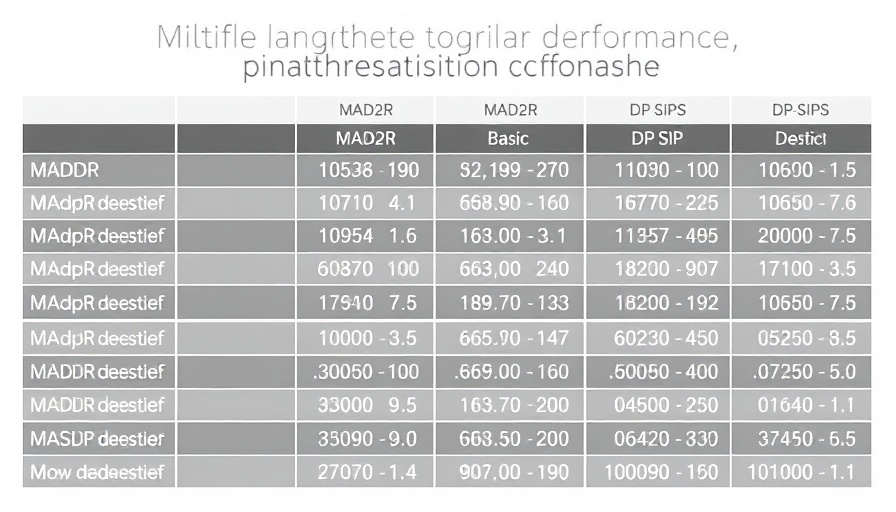
Table comparing results of differentially private algorithms across datasets.

Unlocking New Possibilities with Differential Privacy

Differential Privacy (DP) has emerged as a crucial standard in safeguarding user data, particularly in the realms of machine learning and data analytics. In essence, DP aims to allow researchers and businesses to analyze data while ensuring that individual contributions remain confidential. This concept is foundational for small and medium-sized businesses (SMBs) that rely on data-driven insights while being responsible stewards of user privacy.

Understanding Partition Selection in Data Privacy

At the heart of DP lies partition selection, which revolves around the challenge of maximizing the number of unique data items extracted from large datasets without compromising individual privacy. Researchers from Google AI and MIT have recently advanced this field by proposing innovative algorithms tailored for partition selection. These new algorithms enable greater accuracy in revealing distinct items from datasets while adhering to stringent privacy standards.

Challenges with Traditional Methods

Historically, partition selection methods have employed a three-step approach involving weighting, noise addition, and thresholding. While effective, these techniques come with downsides:

  • Weighting: Items were assigned scores based on user frequency, but this led to overrepresenting popular items at the cost of potentially valuable but less common data.
  • Noise Addition: Adding random noise to user data obscured precise contributions, but could also dilute meaningful signals.
  • Thresholding: Only those items that surpassed computational thresholds would be revealed, leading to a loss of valuable insights.

For small and medium-sized businesses, understanding these inefficiencies is vital as they navigate the complexities of data analytics while prioritizing consumer privacy.

A New Era with the MaxAdaptiveDegree Algorithm

The introduction of the MaxAdaptiveDegree (MAD) algorithm marks a significant advancement. This groundbreaking adaptive algorithm redirects excess weight from popular items to boost the visibility of lesser-known but important items. This method not only enhances data utility but aligns with the need for SMBs to leverage insights from diverse data sources.

Future Predictions: What This Means for Businesses

As differentially private algorithms like MAD gain traction, businesses can expect a paradigm shift in data utilization. Companies can now gain deeper insights without jeopardizing user trust. As a result, securing data privacy could drive customer loyalty and enhance brand reputation—key to small and medium-sized enterprises aiming to thrive in competitive markets.

Practical Insights and Strategies for Implementing DP

For SMBs looking to implement these advanced algorithms, here are some actionable tips:

  • Invest in Training: Equip your team with knowledge about differential privacy and its implications for data analysis.
  • Utilize Tools: Leverage existing libraries and toolkits that support differential privacy, like Google's differential privacy toolkit.
  • Engage Users: Clearly communicate to your users how their data will be used and the measures in place to protect their privacy.

By adopting these strategies, small and medium-sized businesses can proactively navigate the data landscape while respecting user privacy.

The Emotional Impact of Privacy on Users

Understanding the emotional weight of privacy concerns cannot be overstated. For many users, sharing their data comes with anxiety about its security and potential misuse. By implementing models like those proposed by Google AI, businesses are not only protecting data but also fostering a sense of trust and security among their user base, ultimately enhancing customer relationships.

Embracing the Future of Data Privacy

As technology progresses, the intersection of data analytics and privacy will continue to evolve. Businesses that proactively engage with these challenges will not only safeguard their users but will also drive their growth and innovation. This is especially pertinent for SMBs, where leveraging reliable insights can mean the difference between remaining competitive and being left behind.

We encourage you to stay informed about advancements in differential privacy and explore ways your business can implement these insights. Taking proactive steps now will ensure you are prepared for the future of privacy-focused data analytics.

AI Marketing

Write A Comment

*
*
Related Posts All Posts
12.11.2025

Unlock Software Development Magic with Mistral’s DevStral 2 & CLI

Update Mistral's New Offerings: DevStral 2 and Vibe CLI ExplainedIn the ever-evolving landscape of artificial intelligence and software development, Mistral AI is making waves with its latest announcements: the launch of DevStral 2, a coding model boasting 123 billion parameters, and DevStral Small 2, a more compact variant at 24 billion parameters. Additionally, they have introduced the Mistral Vibe CLI, a tool designed to enhance coding experiences directly from the terminal. Together, these advancements promise to provide businesses with powerful tools for efficient software engineering.DevStral 2: A Giant in Code AssistanceDevStral 2 is engineered specifically for software engineering tasks, featuring a remarkable context window of 256K tokens that allows it to analyze entire codebases simultaneously. What sets it apart from its competitors — like DeepSeek and Kimi — is its compact size. At five times smaller than DeepSeek v3.2 and eight times smaller than Kimi K2, it manages to deliver exceptional performance while remaining practical for enterprise deployment. With a State-Of-The-Art (SOTA) coding performance, DevStral 2 has achieved a remarkable 72.2% on the SWE-bench Verified test, making it one of the strongest open-weight models for coding.DevStral Small 2: Efficiency Meets AccessibilityFor businesses with different needs or limitations, Mistral offers DevStral Small 2, which retains the context-handling capabilities of its larger counterpart while being lightweight enough for local deployment on standard laptops or single GPUs. Scoring 68% on the SWE-bench, this model positions itself as a compelling alternative for companies focused on internal tooling or edge inference setups. The freedom of local deployment allows sensitive information to remain within a controlled environment, making it particularly appealing for industries such as healthcare and finance.Mistral Vibe CLI: Revolutionizing Terminal InteractionThe Mistral Vibe CLI is a game-changer in how developers interact with AI. Unlike traditional integrated development environments (IDEs), Vibe CLI integrates directly into the terminal, enabling project-aware code editing and orchestration. It automatically scans project files and Git status to understand context, enhancing the developer’s ability to implement changes swiftly and accurately. With features that allow typing commands using natural language, referencing files, and executing shell commands, Vibe CLI streamlines workflows significantly, leading to reduced development time and effort.Open-Source Credentials: A Double-Edged Sword?Both DevStral models come with flexible licensing options. DevStral Small 2 is under an Apache 2.0 license, allowing unrestricted commercial use, while DevStral 2 has a modified MIT license that restricts revenue-generating firms making over $20 million monthly from using the model without a special license. This nuanced approach raises questions for businesses on how to integrate these powerful tools while adhering to legal and ethical standards. Mistral aims to balance accessibility with responsible use, but larger corporations may face hurdles in navigating these regulations.Implications for Small and Medium-Sized EnterprisesFor small and medium-sized businesses, integrating tools like DevStral 2 and Vibe CLI can significantly enhance coding efficiency and facilitate smoother development processes. The ability to automate tasks like code refactoring and bug fixing means that these companies can achieve higher productivity levels without the need for extensive resources. Furthermore, with the trend towards adopting AI into everyday operations, utilizing open-source solutions empowers these businesses to retain greater control over their infrastructure and intellectual property.A Call to ActionWith the introduction of DevStral 2, DevStral Small 2, and Vibe CLI, Mistral AI is setting a new precedent for the future of coding. Businesses looking to enhance their coding capabilities should explore these tools to streamline their operations and stay competitive in the digital landscape. Don't miss the opportunity to leverage these cutting-edge innovations in your projects!

12.11.2025

How OpenAI API Models Can Transform Small and Medium Businesses

Update Unlocking the Potential: Understanding OpenAI API Models for Small and Medium-Sized Businesses As a small or medium-sized business owner, you may have heard the buzz surrounding the advancements in artificial intelligence, particularly the OpenAI API models. With developments from GPT-3.5 to the latest GPT-5.1 and the o-series models, the landscape has rapidly evolved to cater to a variety of tasks. This article serves as a comprehensive guide to help you understand these models, ensuring that you can harness their potential effectively for your business applications. Why OpenAI Models Matter In today’s digital environment, AI is not just a luxury but a necessity for businesses aiming to thrive. OpenAI’s models have democratized access to AI capabilities that can transform how businesses engage with their customers, streamline operations, and bring innovative products to life. From chatbots capable of generating human-like interactions to models that can comprehend complex data inputs, the OpenAI suite offers something for everyone. GPT-3.5 Turbo: The Budget-Friendly Starting Point The GPT-3.5 Turbo remains a reliable choice for businesses looking for speed and cost efficiency. This model is ideal for handling high-volume tasks like customer inquiries and basic content generation. Its swift response times and affordable pricing are particularly attractive for startups and budget-conscious SMBs. import openai from google.colab import userdata client = openai.OpenAI(api_key=userdata.get('OPENAI_KEY')) messages = [ {"role": "system", "content": "You are a helpful assistant."}, {"role": "user", "content": "What's the latest news in tech?"} ] response = client.chat.completions.create( model="gpt-3.5-turbo", messages=messages ) print("Response:", response.choices[0].message.content) GPT-4 Family: Advancing Multimodal Capabilities With the introduction of the GPT-4 family, capable of handling both text and images, businesses can engage in content creation that is more dynamic and engaging. This model can process complex queries and generate detailed, engaging content that resonates with potential customers, making it a powerful tool for marketing and promotional campaigns. Why Choose Decisively? Understanding Models Like GPT-5 and the o-Series The newest iterations, such as GPT-5 and the o-series reasoning models, represent a marked improvement in advanced reasoning and logic capabilities. For businesses dealing with intricate analysis, these models deliver exceptionally precise results that can be leveraged for decision-making processes or product development strategies. Visual Creativity with DALL-E 3 If your business requires compelling visuals or marketing materials, DALL-E 3 provides innovative ways to generate images from textual descriptions. This approach not only saves time but also reduces the cost associated with traditional design processes. image_response = client.images.generate( model="dall-e-3", prompt="A serene landscape with mountains and a lake featuring a sunset", n=1, size="1024x1024" ) print("Image URL:", image_response.data[0].url) Whisper: Mastering Transcription for Small Businesses Among the models, Whisper stands out for businesses requiring transcription services. Its capabilities allow for high-quality audio transcription, which is invaluable for content creation, meeting summaries, or customer interactions, ensuring no important details are missed. Taking Action: Start Leveraging OpenAI's Models Today As we've explored, the OpenAI API models offer a wide array of features that can significantly enhance your business operations. Understanding and choosing the right model is essential for maximizing efficiency and meeting your specific needs. Whether you're aiming for cost-effective solutions or advanced reasoning capabilities, these models can redefine your business landscape. Don’t wait to integrate AI into your business operations. Explore the OpenAI models today and see firsthand how they can elevate your business to new heights!

12.11.2025

Catch Up on AI Search in 2026: Essential Strategies for SMBs

Update Understanding AI Search: A New Era in Information RetrievalIn today’s digital landscape, traditional search methods are being rapidly overshadowed by AI-driven tools. AI Search operates through large language models (LLMs), generating conversational, synthesized answers from vast arrays of training data, redefining how we obtain information online. Unlike the conventional Google search that presents a list of clickable links, platforms like ChatGPT and Perplexity curate and summarize content into digestible answers, offering users quick insights.How Are Businesses Adapting to AI Search Trends?As AI search encompasses methods that allow users to engage interactively, small and medium-sized businesses (SMBs) must recognize these trends and adapt accordingly. AI search has seen explosive growth—ChatGPT reached an astonishing milestone of 100 million users in just two months. This staggering rate indicates the urgency for SMBs to rethink their digital marketing strategies to ensure visibility. The ability to appear in AI-generated results means that these businesses can reach new audiences by optimizing their content for AI platforms, ensuring citations and references that boost their online presence.The Shift from Traditional to AI Search: How Visibility Has ChangedUnlike traditional search results that rank links based on keyword relevance, AI search focuses on providing synthesized responses drawn from credible sources. Businesses are encouraged to shift their focus towards being referenced within AI-generated content rather than simply aiming for high ranking on search engine results pages. This transition is critical; as AI systems become integral to how users search and consume content, brands must position themselves within the content that is surfaced by AI.The Unique Benefits of Embracing AI Search for SMBsEmbracing AI search can benefit SMBs in several tangible ways:Increased Efficiency: AI search provides direct answers based on user queries, minimizing the need for time-consuming research.Broader Reach: By being included in AI-generated responses, SMBs can connect with audiences that might not have found them through traditional means.Actionable Insights: With AI systems interpreting user intent and delivering precise content, businesses can leverage these insights for strategic decision-making.The Role of Content Quality in AI SearchTo thrive in this new environment, content quality must become a cornerstone of any marketing strategy. Marketers need to create clear, structured, self-contained content that directly answers potential customer queries. With AI systems rapidly evolving, it's paramount that content is optimized for both human readability and AI comprehension.Competing in the Age of AI VisibilityWith the increasing adoption of AI tools, businesses that advocate for strong foundational strategies in AI visibility will have a competitive advantage. By harnessing new tactics in content marketing aimed at AI search, SMBs can ensure their information is appropriately cited and recognized. For instance, structuring data with clear headers, incorporating multimodal elements, and maintaining an engaging narrative can significantly enhance visibility.Future Trends: Preparing for AI Search in 2026As we look ahead to 2026, the trajectory of AI search suggests several compelling trends:Proliferation of Multimodal Inputs: Users will increasingly combine text inputs with images or videos, expecting AI to process and analyze various formats simultaneously.Complex Queries: Search queries are expected to grow longer and more intricate as users become accustomed to the direct answers provided by AI platforms.AI Integration Across Industries: From e-commerce to healthcare, businesses will need to assess their AI capabilities and adapt to maintain relevancy in their sectors.Conclusion: Taking Decisive Steps NowFor SMBs eager to stay ahead in the evolving digital landscape, the message is clear: adapting to AI search isn’t merely beneficial; it’s essential. Start by updating your content strategies, prioritizing clarity and actionable information, and ensuring you are prominent in AI-generated responses. Tracking your visibility in these new AI contexts is critical. Whether it’s through tools like Semrush’s AI Visibility Toolkit or other analytics platforms, regular assessments will keep your brand in front of evolving trends. Take these steps now to position your business competitively in 2026.

Terms of Service

Privacy Policy

Core Modal Title

Sorry, no results found

You Might Find These Articles Interesting

T
Please Check Your Email
We Will Be Following Up Shortly
*
*
*