Add Row
Add Element
UPDATE
Add Element
  • Home
  • Categories
    • Business Marketing Tips
    • AI Marketing
    • Content Marketing
    • Reputation Marketing
    • Mobile Apps For Your Business
    • Marketing Trends
August 06.2025
3 Minutes Read

How OpenAI's New Language Models Can Transform Your Small Business

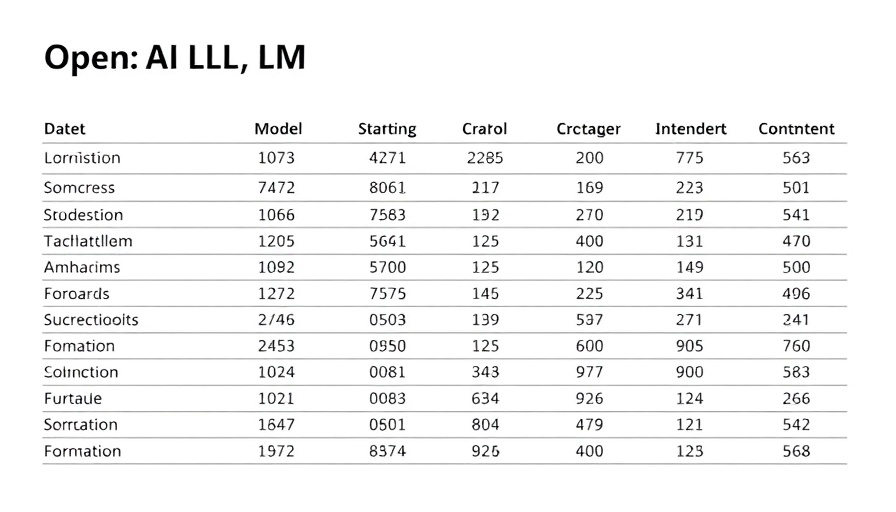
OpenAI open-weight LLMs data table showing models and parameters.

Unlocking the Power of Open-Weight Language Models for Your Business

In a remarkable shift, OpenAI has unveiled two cutting-edge open-weight language models: gpt-oss-120B and gpt-oss-20B. These innovations are game-changers, particularly for small and medium-sized businesses looking to harness the capabilities of advanced AI without the constraints of proprietary software. Imagine having the ability to customize and run a powerful AI model right on your laptop—this is now within reach!

Why Open-Weight Models Matter for Entrepreneurs

For years, businesses faced challenges when integrating AI tools due to high costs and dependency on cloud services. OpenAI's recent release, governed by a permissive Apache 2.0 license, empowers businesses to access these models for commercial and experimental use without fear of vendor lock-in. This transformation not only enhances transparency but also allows organizations to tailor solutions to their specific needs, driving innovation and competitiveness.

Meet gpt-oss-120B: A Titan of AI

The gpt-oss-120B model boasts a staggering 117 billion parameters, made possible through the innovative Mixture-of-Experts technology. Designed to run on a high-end GPU, it provides an unprecedented level of reasoning and automation that can streamline processes like research, technical writing, and code generation. With up to 128,000 tokens of context—a capability that lets users analyze vast amounts of information—this model is poised to transform how businesses operate.

gpt-oss-20B: AI Power in Your Pocket

For those on the go, the gpt-oss-20B fits the bill perfectly. This model runs seamlessly on consumer-grade laptops and even smartphones, making it one of the most powerful reasoning engines available for mobile devices. Imagine the ability to perform complex analysis or generate content right from your phone! It’s particularly beneficial for businesses needing quick, on-device AI solutions without relying on cloud processing. Mobile-friendly AI opens doors for innovative applications in areas like localized services and agile marketing strategies.

Real-World Applications: Driving Business Forward

Imagine utilizing gpt-oss-120B for generating customer insights or automating marketing strategies tailored to your audience. With fine-tuning capabilities, businesses can optimize the model to reflect their brand’s voice and goals. The gpt-oss-20B can empower mobile sales teams to access AI-driven analytics at any moment, enhancing decision-making and customer engagement.

Revolutionizing Marketing Strategies with AI

Both models pave the way for smarter marketing initiatives. AI can analyze consumer data to craft personalized marketing campaigns, provide real-time insights for decision-making, and automate routine tasks, allowing teams to focus on creativity and growth. By leveraging these models, businesses can enhance their reputation and deliver targeted messages to their audiences more effectively than ever before.

Looking Ahead: The Future of AI in Business

As we look to the future, the integration of open-weight LLMs is set to change the landscape of business as we know it. The potential for on-demand customization will not only make AI accessible for small businesses but also encourage a broader adoption across various sectors. Imagine a world where every entrepreneur has the power of AI at their fingertips, creating solutions tailored to their unique challenges!

Take Action Now: Embrace AI

The time to integrate these powerful tools into your business practice is now. With the launch of gpt-oss-120B and gpt-oss-20B, small and medium-sized businesses have the opportunity to redefine how they leverage technology. Don't let this wave of innovation pass—explore how these models could enhance your operations and marketing strategies today!

AI Marketing

Write A Comment

*
*
Related Posts All Posts
12.24.2025

How Google Code Wiki Revolutionizes Documentation for Businesses

Update The Future of Code Documentation: Google Code Wiki For many small and medium-sized businesses, the time wasted on comprehending existing code can be staggering. Coding experts estimate that they spend around 30-40% of their time decoding obsolete documentation and trying to understand ambiguous code. This means two entire working days each week are lost, often resolving issues arising from past developers who may no longer be available. Thankfully, this is about to change with Google’s recent launch of the Code Wiki. Revolutionizing Documentation Introduced in November 2025, Google Code Wiki is not merely a new tool but a paradigm shift in how we understand and manage codebases. By leveraging artificial intelligence, this innovative platform offers documentation that syncs with your existing code, ensuring it is always up to date. Imagine having an expert developer familiar with your entire codebase, constantly ready to update documentation as code evolves. Code Wiki does precisely this, eliminating the dreaded problem of documentation drift. Key Features That Make Code Wiki Stand Out Self-Updating Documentation: The core feature of Code Wiki is its ability to treat documentation as a by-product of the coding process, meaning updates occur automatically with each code commit. This not only enhances the accuracy of information but also streamlines the documentation process significantly. Interactive Linking: Code Wiki allows users to navigate between high-level descriptions and detailed implementations seamlessly. Developers can delve into code, observe related components, and track execution paths without breaking their workflow. Visual Architecture Diagrams: Automatically generated diagrams reflect changes in real-time. If a microservice is added or a database dependency modified, these visual aids update instantly, providing a clear picture of system architecture. Intelligent Chat Assistant: A built-in chat interface powered by Gemini allows developers to pose questions in layman's terms. Whether inquiring about specific functionalities like authentication processes or database dependencies, developers receive prompt and thorough answers with links to relevant code parts. Why Is This Tool Essential for Businesses? The implications for small and medium-sized businesses that adopt this technology are profound. Not only does it promise faster onboarding for new developers, but it also tackles the challenges associated with legacy systems where original developers have left. With the aid of Code Wiki: Accelerating Onboarding: New recruits gain immediate access to dynamic documentation, diminishing their dependency on older team members and allowing them to contribute much faster. Enhancing Cross-Team Collaboration: Multiple teams can access a centralized documentation medium, identifying integration points and dependencies widely without redundant meetings, fostering a more collaborative environment. Open-Source Accessibility: By lowering the entry barrier for contributors through comprehensive, continuously updated documentation, organizations can attract new talent and insights. Facing the Challenges Despite its advantages, Code Wiki is not without limitations. One primary concern is the context gap where, while the code is documented, the reasoning behind significant architectural decisions might not be captured. Understanding why a developer made specific coding choices can be crucial for future modifications, particularly for teams shifting away from conventional documentation practices. Moreover, the tool depends heavily on quality code. If the code is poorly structured, the generated documentation may also be insufficient. Although Code Wiki currently supports popular programming languages and frameworks, expansion to include broader support will be essential for sustained adoption. Conclusion: A New Era in Code Management Google Code Wiki tackles one of the biggest challenges in software development: bridging the gap between what the code does and what developers understand. By offering continuously updated, AI-based documentation, it guarantees quicker learning curves, fewer frustrations, and ultimately, more time spent on building innovative solutions rather than deciphering outdated code. For small and medium businesses looking to optimize their coding processes and on-board new talent swiftly, the introduction of Code Wiki marks a significant evolution in how code documentation can be approached. As the tool advances and expands, it holds the potential to reshape not only coding structures but also team dynamics and integration practices in businesses everywhere. Embracing this shift could signify a leap towards enhanced productivity and smoother operations in software development!

12.24.2025

Harnessing ACR: Build Your Own Open-Source Logo Detector

Update Unlocking the Power of Automatic Content Recognition for Businesses In today's visual-centric digital marketplace, logos serve not just as identifiers of brands, but as crucial assets in measuring brand engagement. For small and medium-sized businesses looking to maximize their marketing impact, understanding how Automatic Content Recognition (ACR) works in conjunction with logo detection can offer significant insights. This article explores practical steps you can take to create your own open-source logo detector, enabling you to assess the presence of your brand and its competitors in media effectively. What is Automatic Content Recognition? Automatic Content Recognition (ACR) technologies analyze media content, identifying elements without reliance on external metadata such as filenames or tags. Think of ACR as a powerful tool that can recognize logos within videos or images, helping you gain insights such as how often your logo appears on screen, or whether your branding is being displayed where it should be. Why is Logo Recognition Important? In this era of rapidly proliferating digital content, being able to monitor your logo's visibility can protect your brand's integrity and allow you to evaluate marketing strategies effectively. ACR not only helps ensure your brand is getting the exposure it deserves but also helps in detecting misuse or unapproved representations of your logo. This capability is crucial in today's landscape, where public perception can be tainted by inadvertent associations. Building Your Logo Detector: The Open-Source Approach Creating your own logo detector can be a gamechanger! With various frameworks available, building an effective logo recognition system involves leveraging open-source image processing libraries like OpenCV or deep learning tools like TensorFlow to recognize and detect logos in real-time. Steps to Create Your Logo Recognition System Gathering a Logo Dataset: Start by compiling a diverse dataset of logos. As is noted in various academic and practical implementations, having a rich and varied dataset can significantly enhance the detector's accuracy. You can find datasets such as FlickrLogos-32 or create your own using APIs such as Google's Vision API. Choosing Your Detection Model: Implement models like YOLO (You Only Look Once) or deep learning architectures (CNNs) which have shown significant prowess in detecting logos within images. The choice of model may depend on your desired level of complexity and system demands. Training and Testing: Once your model architecture is set, begin the training phase using your logo dataset. Iteratively testing and adjusting parameters based on feedback will help refine your model's performance. Implementation and Use: Deploy your trained model in your business environment, using it to monitor competition, track your brand’s media presence, and even engage in unauthorized logo use detection. Enhancing Accuracy Through Best Practices Challenges such as logo variability, image occlusions, and background noise can hinder detection accuracy. However, techniques like data augmentation (creating diverse datasets) and transfer learning (utilizing pre-trained models) can help significantly uplift performance. Involving practices like these not only fosters accuracy but engenders a more reliable outcome. Real-World Applications of Logo Detection Several use cases highlight logo detection’s potential: Brand monitoring, competitive analysis, and copyright protection stand as primary applications. Businesses can track website mentions, social media engagement, and even combat infringements of their intellectual property through robust logo detection systems. Future Trends in Logo Recognition Looking forward, the intersection of ACR with augmented reality (AR) technologies promises exciting applications. Imagine a world where consumers can interact with logos in real-time; such integrations can enhance customer engagement and brand experiences. Final Thoughts: The Brand Empowerment Journey Understanding and implementing a logo detection system stands to benefit small and medium-sized businesses immensely. By building your own open-source logo detector, you empower your marketing strategies and gain a competitive edge in the crowded digital landscape. Do you want to take your brand visibility to the next level? Start exploring the techniques mentioned above and see how easy it is to leverage Automatic Content Recognition for your business!

12.24.2025

Boost Your Business with Top Free AI Courses: Certificates for All

Update Unlock AI Knowledge: Essential Free AI Courses for Businesses In today's fast-paced business landscape, the integration of artificial intelligence (AI) has transformed how small and medium-sized enterprises (SMEs) operate. The ability to understand and utilize AI effectively can provide a competitive edge. However, navigating the vast landscape of AI education can be daunting. Thankfully, there are numerous free courses available that not only introduce the fundamentals of AI but also offer certifications that can enhance your credibility in the tech-savvy market. A Variety of Learning Styles Accommodated Learning AI isn't a one-size-fits-all journey—different individuals have different learning preferences. Some thrive in structured environments, while others prefer hands-on methods. Recognizing this diversity, the top free AI courses today cater to a variety of learning styles, ensuring that businesses can find the right fit for their teams. Course Highlights: Free AI Courses with Certificates Here are some standout free AI courses, along with what makes each unique: Introduction to AI – Google: This course provides an industry-aligned overview of AI concepts. It’s perfect for those who want a recognizable brand on their CV. Learners gain exposure to concepts through real-world applications and can earn a free certificate via Coursera financial aid. Getting Started with AI and ML – LinkedIn Learning: This comprehensive learning path focuses on core machine learning concepts and is suited for ambitious learners looking for a structured journey. The course spans roughly 10 hours and culminates in a certification, perfect for those invested in their AI career path. AI Overview – POLI: This course presents a logical, academic foundation for AI, emphasizing problem-solving and reasoning for beginners. It’s ideal for those who appreciate a traditional lecture format and prefer a structured academic approach. AI Fundamentals – IBM: Aimed at beginners, this course focuses on practical AI applications across industries, making it suitable for business professionals eager to leverage AI in their work. A free certificate is offered upon completion. AI for Everyone – Deeplearning.ai: This is a no-code course that dives into AI’s ethical implications, making it great for non-technical professionals. Ideal for managers and decision-makers, it emphasizes the strategic aspect of employing AI in organizations. The Importance of Certificates In the current job market, certificates can serve as a substantial enhancement to your professional profile. They not only signify completion of a course but also indicate verified knowledge in a specific area—improving employability for individuals and providing SMEs with better-equipped teams. Closing Thoughts and Actionable Path As small and medium-sized businesses navigate the modern landscape, investing in learning and upskilling employees through free AI courses is a wise decision. Not only can it equip teams with the necessary skills to implement AI solutions effectively, but it can also boost overall business productivity and innovation. Are you ready to take the next step in empowering your team? Explore these valuable free AI courses and encourage your employees to learn and earn certifications that will enhance both your business and their careers.

Terms of Service

Privacy Policy

Core Modal Title

Sorry, no results found

You Might Find These Articles Interesting

T
Please Check Your Email
We Will Be Following Up Shortly
*
*
*