Add Row
Add Element
UPDATE
Add Element
  • Home
  • Categories
    • Business Marketing Tips
    • AI Marketing
    • Content Marketing
    • Reputation Marketing
    • Mobile Apps For Your Business
    • Marketing Trends
August 28.2025
3 Minutes Read

How Hermes 4 AI Models Empower Small Businesses with Hybrid Reasoning

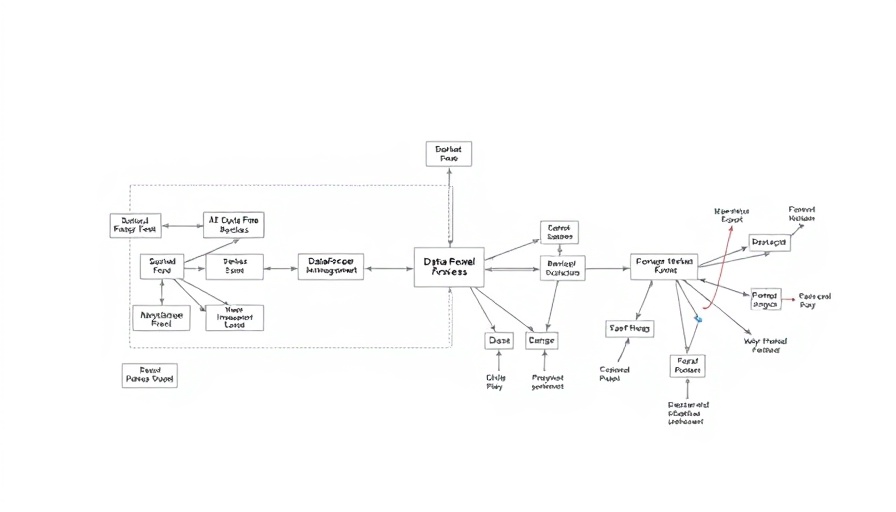
Diagram detailing DataForge workflow for Hermes 4 AI Models, featuring process flow and graph.

Unlocking Innovation: Introducing Hermes 4 AI Models

In an exciting advancement for small and medium-sized businesses (SMBs), Nous Research has recently unveiled Hermes 4, a pioneering family of open-weight AI models. Available in 14B, 70B, and 405B parameter sizes, these models promise to enhance business processes while maintaining transparency and neutrality. Unlike traditional AI approaches, Hermes 4 introduces hybrid reasoning, allowing models to alternate between standard responses and thorough thinking by using specific tags when confronting complex problems.

Revolutionizing Data Generation with DataForge

At the heart of Hermes 4 is DataForge, a groundbreaking system designed for synthetic data generation. Unlike conventional models that rely heavily on manually curating data, DataForge utilizes a directed acyclic graph (DAG) approach. Each node represents a specific action using the Planning Domain Definition Language (PDDL), ensuring an automated and efficient way of creating diverse data pipelines.

For instance, DataForge can transform a Wikipedia article into a rap song, demonstrating its versatility. This innovative approach generates massive amounts of data—approximately 5 million samples totaling around 19 billion tokens—necessitating extensive reasoning capabilities. This could greatly benefit SMBs by providing them with tailored data that enhances their AI models.

Quality Assurance Through Rejection Sampling

In a notable feature of Hermes 4, Nous Research has harnessed its open-source reinforcement learning environment, Atropos, to implement rejection sampling across an impressive 1,000 task-specific verifiers. This meticulous verification process ensures that businesses using Hermes 4 receive high-quality reasoning outputs, leading to more reliable AI interactions.

Each verification environment focuses on different aspects of application, such as formatting, instruction adherence, and schema compliance. This infrastructure not only prepares businesses for scalable AI implementation but also safeguards against common pitfalls in automated responses.

Tackling Overlong Content Generation

One of the challenges in AI text generation has been controlling excessive output length. Hermes 4 addresses this by establishing sophisticated management protocols. With token-heavy reasoning samples, averaging five times more tokens than standard outputs, the model caters to situations where extended deliberation is necessary. Such improvements can assist SMBs in creating more concise and impactful marketing content that resonates with their audiences.

Transforming Business Operations with AI

As we look forward, the potential applications of Hermes 4 across industries are immense. For smaller enterprises, having access to advanced AI tools can lead to greater efficiencies in operations and enhanced customer interactions. Imagine a retail business automatically generating personalized product recommendations based on customer inquiries—this is just one example of how Hermes 4 can elevate customer service.

This family of models not only improves operational efficiency but also fosters creativity and engagement as businesses explore new ways to connect with their customers. As SMBs increasingly embrace AI, the importance of transparency and ethical practices will be foundational in gaining consumer trust. Hermes 4 sets a precedent in this regard, showcasing that sophisticated technology can indeed be developed with open-source methodologies.

Call to Action: Embrace AI for Innovative Growth

As the landscape of AI continues to evolve, it's crucial for small and medium-sized businesses to stay ahead of the curve. By integrating models like Hermes 4 into their operations, they can harness the power of AI for innovation and customer engagement. Why not explore how these advanced AI systems could transform your business’s marketing strategies? Embrace this evolution today!

AI Marketing

Write A Comment

*
*
Related Posts All Posts
12.05.2025

Unlocking AI's True Potential: Andrej Karpathy’s LLM Council for Businesses

Update An Innovative Approach to AI: Introducing the LLM Council In today's rapidly evolving digital landscape, businesses are increasingly turning to artificial intelligence (AI) and machine learning (ML) to navigate complex challenges and enhance decision-making processes. One exciting development in this space is the LLM Council, an initiative spearheaded by renowned AI expert Andrej Karpathy. This innovative platform emphasizes a multi-model approach to AI responses, aiming to improve reliability and reduce biases that often plague AI outputs. Understanding the LLM Council The LLM Council functions as a collaborative environment where multiple language models (LLMs) can provide input on a given query. Much like a roundtable of experts, the process initiates with each AI model generating individual responses based on the same prompt, thereby ensuring diversity in viewpoints. Following this, these responses undergo a peer review phase, where models critique and rank each other's answers, leading to a consensus through a designated 'Chairman' model that synthesizes the best insights. This method not only fosters accuracy but also combats common issues like misinformation and biased outputs. Why Multi-Model Systems are Essential Relying on a single model often results in outputs influenced heavily by its inherent biases. Each AI model is constrained by its training data and if that data is flawed, the responses will reflect those errors. A multi-model system, however, acts as an insurance policy against such risks. As outlined by research studies, including one from MIT on “Debating LLMs,” ensemble approaches enhance accuracy and can tackle complex reasoning tasks that might elude a single model. This layered approach not only enriches the responses but also promotes a deeper understanding of the content it addresses. Strategies for Developers and Businesses The implications of the LLM Council extend beyond individual users to businesses and developers. By treating language models as interchangeable parts, developers can seamlessly swap models to optimize performance without being locked into one vendor. This adaptability also serves as a benchmark for evaluating models in real-time, important for businesses that rely on precise data interpretation. Improved adaptability encourages companies to experiment with different models to find the most suitable configurations for their specific needs. Hands-On: Implementing the LLM Council For businesses looking to experiment with the LLM Council, implementing it locally is surprisingly straightforward. With basic command line knowledge, users can clone the repository from GitHub, install necessary packages, and configure the application with an API key from OpenRouter. The hands-on experience not only demystifies AI operations but also empowers teams to leverage powerful tools that can transform their decision-making processes. Limitations and Future Considerations No project is without its challenges, and the LLM Council is no exception. Currently, it’s primarily for experimental use, lacking necessary security features for commercial environments. Additionally, costs can escalate as querying multiple models generates increased API fees, which businesses must consider. Despite these hurdles, the advantages of a collaborative AI approach make it a compelling avenue for businesses invested in long-term digital transformation. Conclusion: The Path Forward in AI The LLM Council embodies the future of AI interaction, steering users away from relying solely on black-box models with uncertain trustworthiness. By implementing a peer-review system within AI responses, it showcases how consensus-driven models can lead to better outcomes. As more businesses embrace this innovative tool, the potential for enhanced decision-making processes and improved reliability in AI outputs will undoubtedly influence the direction of AI development. As we stand on the brink of significant AI advances, companies are encouraged to explore how the LLM Council can transform their strategies towards AI utilization. With the promise of reliability and enhanced performance, the LLM Council could very well be a game-changer for small and medium-sized businesses striving for innovation and efficiency. Embrace this revolutionary tool and watch how it elevates your business insights!

12.05.2025

Mistral Large 3: A Game Changer in Open-Source AI for SMEs

Update Revolutionizing Open Source AI with Mistral Large 3 The rapid development of open-source large language models (LLMs) has transformed the landscape of artificial intelligence. With the introduction of Mistral Large 3 on December 2, 2025, we see a significant leap in usability and efficiency that meets the needs of businesses, especially small and medium enterprises (SMEs). Unlike previous models that chased larger sizes, Mistral’s approach focuses on compactness and robust performance, which is an enticing combination for companies looking to integrate AI without the overhead of huge computational resources. The Need for Efficiency in AI For many SMEs, the requirement is not for the largest model, but rather for one that can handle specific tasks effectively. Mistral Large 3 offers a suite of models—3B, 8B, and 14B—that cater to various operational needs, from chat interactions to complex business logic. This flexibility allows businesses to select the model that fits their specific workloads, reducing unnecessary expenditures on larger models that may provide more power than needed. Key Features of Mistral Large 3 Mistral Large 3 stands out with its unique features, primarily its sparse mixture-of-experts (MoE) architecture. This architecture utilizes about 41 billion active parameters out of a total of 675 billion, making it both powerful and efficient. Its ability to process up to 256K tokens allows for in-depth reasoning capabilities, making it suitable for tasks like document comprehension, conversational flow management, and long-form data processing. This is especially beneficial for SMEs dealing with extensive paperwork and data. Multimodal Functionality: Bridging Text and Images The integration of multimodal capabilities means Mistral Large 3 can process both text and images, making it a versatile tool in today’s digital environment. This feature enables businesses to use it for various applications such as customer support, where it can interpret customer queries from screenshots and assist in generating relevant responses. For instance, retrieving information from a document and summarizing it enhances operational efficiency, and this is a use case many SMEs would appreciate. Comparison with Competitors When compared to competitors like Gemini 3 Pro or GPT-5.1, Mistral Large 3 showcases notable strengths in instruction-following tasks, making it a more reliable choice for real-world business applications. The ability to maintain coherent outputs over extensive dialogue and complex inputs reduces the chance of errors in communication—an essential aspect for customer-facing interactions. Cost-Effectiveness that Empowers Businesses One standout feature of Mistral Large 3 is its pricing strategy, particularly its affordability compared to leading proprietary models. For small businesses, managing costs while attaining performance is crucial. Mistral claims its models are approximately 80% cheaper than their proprietary counterparts. This cost efficiency, coupled with the flexibility offered by the Apache 2.0 licensing, allows teams to fine-tune and customize the models without being tied to a specific vendor. Implementing Mistral Large 3 in Your Business For SMEs eager to harness the full power of Mistral Large 3, implementation requires a few steps. Setting up can be efficiently done using the Ollama platform, where users can easily pull the desired model and interact with it directly. The streamlined setup promotes quick adaptation into workflows, which is pivotal for companies that want to see immediate results from their AI integration. Real-World Applications: Success Stories from SMEs Businesses across various sectors have begun to adopt Mistral Large 3, realizing substantial improvements in efficiency and customer interaction. For example, a small tech firm used the model to automate customer support, enabling quicker query resolution results. Using the reasoning capability of Mistral 3, they saw a marked decrease in response time, resulting in higher customer satisfaction rates. Such success stories are what make this model appealing for many after less costly yet efficient AI interventions. Future Predictions: What Lies Ahead for Mistral? As the technology continues to evolve, the future of Mistral and its models looks promising. There is potential for enhanced reasoning capabilities, expanded multimodal functionalities, and even greater efficiency. Looking ahead, SME leaders should keep an eye on advancements in AI technology and consider how tools like Mistral Large 3 can fit into their strategic vision for growth. With the ever-increasing demands for efficiency in AI solutions, SMEs are likely to find themselves at the forefront of this transformative technology. Investing in tools like Mistral Large 3 could provide them with the competitive edge needed in today’s market. In a world where AI can significantly enhance business operations, exploring robust open-source solutions like Mistral Large 3 is not just a choice; it's a necessary step towards sustainable business growth. Enjoying the benefits of various model family choices empowers SMEs to embark on their journey to optimize workflows while saving vital resources.

12.05.2025

Unlocking the Future of AI Memory: Titans and MIRAS for Small Businesses

Update Revolutionizing AI Memory for Small Businesses In the fast-paced world of technology, small and medium-sized businesses (SMBs) often struggle to leverage advanced AI tools that can enhance their operations. Enter Titans and MIRAS: a groundbreaking combination introduced by Google that promises to help AI systems remember and adapt in real-time, mimicking a more human-like cognitive approach. By understanding how this technology works, SMBs can position themselves to harness the full potential of AI in their business strategies. Understanding the Titans Architecture The Titans architecture is a sophisticated AI model designed to maintain a rich, long-term memory while processing large volumes of data efficiently. Unlike traditional models that often rely on static memory states, Titans employs an approach similar to human cognition—actively learning and updating its memory as new data streams in. This is crucial for businesses that rely on keeping track of customer interactions, preferences, and inquiries over time. MIRAS: A Strategic Framework for Real-time Adaptation The MIRAS framework complements Titans by providing the theoretical groundwork for how these memory updates occur. It focuses on ensuring that AI can distinguish between routine inputs and surprising new insights—information that breaks the norm and should be remembered for the long term. This means businesses can rely on AI to not only recall past customer interactions but also adapt based on the latest trends, ensuring relevance. Why Long-term Memory Matters for Businesses In a competitive market, the ability to remember previous customer interactions can be the difference between gaining loyalty and losing sales. The Titans architecture allows for an enriched context understanding, making AI tools far more effective in applications such as customer service, marketing campaigns, or content delivery. Imagine an AI that remembers your customer's favorite products or previous complaints, personalizing future interactions for improved satisfaction. The Power of Surprise Metrics A standout feature of the Titans architecture is the use of what researchers refer to as "surprise metrics." This mechanism allows Titans to prioritize information that deviates from expected patterns—essentially training it to focus on details that truly matter. For SMBs, this means getting insights into when their customers experience issues, which products are frequently inquired about, or what new trends might be emerging, thereby translating to actionable business insights. Learning from AI Models: Practical Tips for Implementation As SMBs consider implementing AI memory systems like Titans and MIRAS, here are some practical tips to maximize effectiveness: Define Clear Objectives: Understand the specific memory needs of your business. Are you looking to enhance customer service, improve marketing strategies, or streamline operations? Incorporate Feedback Loops: Regularly analyze how well your AI system is retaining and utilizing memory. Make adjustments based on direct feedback from users and customers. Monitor Surprise Metrics: Pay attention to how the AI prioritizes new information. This will help in understanding what innovative changes are worth investing time and resources into. Looking Ahead: How AI Memory Will Continue to Evolve The implications of Titans and MIRAS are vast, paving the way for the future of AI memory. As these technologies evolve, we might see even more nuanced applications, such as enhanced forecasting tools for inventory management or personalized marketing strategies that adapt in real time based on customer interactions. Embracing these advancements not only prepares SMBs for today’s market demands but also equips them with the tools to adapt to future changes. The transition to smarter AI tools might well be vital for survival in an increasingly competitive landscape. Call to Action Small and medium-sized businesses should explore integrating AI systems like Titans and MIRAS into their operations to benefit from enhanced memory capabilities. Start a conversation with your tech support team or explore tailored solutions that could help your business tap into the power of AI-driven long-term memory today!

Terms of Service

Privacy Policy

Core Modal Title

Sorry, no results found

You Might Find These Articles Interesting

T
Please Check Your Email
We Will Be Following Up Shortly
*
*
*