Add Row
Add Element
UPDATE
Add Element
  • Home
  • Categories
    • Business Marketing Tips
    • AI Marketing
    • Content Marketing
    • Reputation Marketing
    • Mobile Apps For Your Business
    • Marketing Trends
September 06.2025
3 Minutes Read

How Google’s Personal Health Agent (PHA) Can Transform Your Business's Wellness Approach

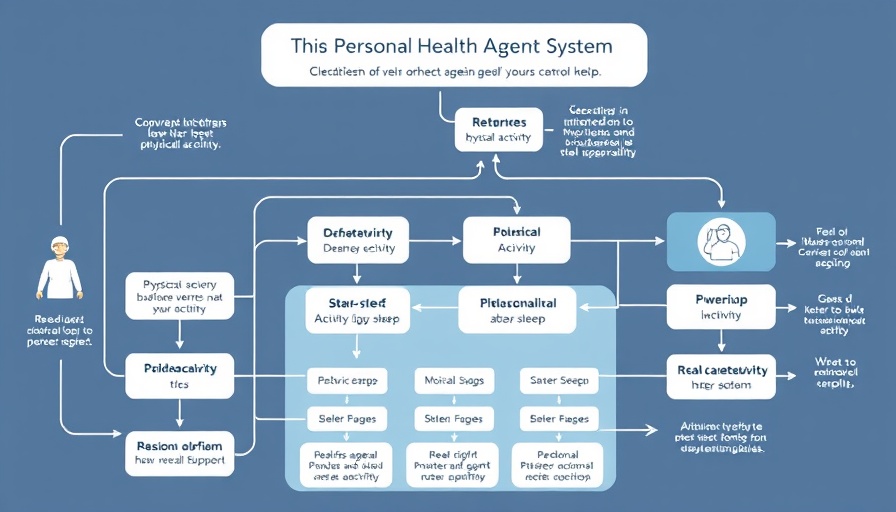
Overview of Personal Health Agent PHA with flowchart elements.

Unlocking Health Insights: The Personal Health Agent Framework

In a world increasingly focused on health and wellness, Google’s new Personal Health Agent (PHA) framework promises to revolutionize personal healthcare interactions. This innovative system is not just another app; it brings together various specialized agents that collaborate to understand individual health needs holistically. With the integration of AI technology, including the latest Gemini 2.0 model, the PHA offers a multifaceted approach to personalized health management.

Why Does the PHA Matter to Small and Medium Businesses?

Imagine a health coach that doesn’t just tell you what to do but understands your history, preferences, and even your biometric data. For small and medium businesses interested in offering employee wellness programs, the PHA can serve as a valuable tool. Not only does it aggregate and interpret data from various health sources, but it also allows businesses to provide personalized health guidance to their employees without needing to hire a full-time health coach. By leveraging the PHA, companies can enhance employee engagement and productivity while fostering a culture of well-being.

The Mechanics of the PHA: How It Operates

The PHA operates on a unique multi-agent architecture, consisting of:

  • Data Science Agent (DS): This agent analyzes data collected from wearables and health records to provide actionable insights. For example, it may identify trends linking physical activity with improved sleep quality, empowering users to make informed health decisions.
  • Domain Expert Agent (DE): Acting as a conduit for medical expertise, the DE agent synthesizes personal health records with demographic data and wearable signals. It ensures that the information provided is not only accurate but also relevant to the user’s context.
  • Health Coach Agent (HC): The HC agent delivers personalized coaching, motivating users to achieve their fitness goals based on the insights shared by the DS and DE agents.

Unlike traditional health systems that often deliver fragmented and isolated data, the orchestration by the PHA unifies these outputs into coherent and actionable recommendations. This amalgamation of insights enables users to navigate their health journeys more effectively with a personalized experience.

Evaluating the Impact: How the PHA Enhances Health AI

The introduction of the PHA framework reflects a significant step towards integrated health AI solutions. By evaluating different agents' performance—whether discussing digital data interpretation or personalized health advice—Google has showcased the potential of AI in health care.

Small and medium-sized businesses can benefit from this by utilizing data to customize wellness programs for their employees. This not only enhances health outcomes but also reduces healthcare costs in the long run, an advantage businesses are always eager to capitalize on.

Imagining the Future of Health Interactions

As technology advances, the future of health interactions appears promising. With frameworks like the PHA, we can envision a world where personal health agents will not only assist individuals in managing their health more effectively but also contribute significantly to public health initiatives. Employers who adopt this technology may find themselves at the forefront of employee wellness trends, creating competitive advantages in talent attraction and retention.

Get Involved in Your Health Journey

Your health matters—so why not embrace the benefits of technology that exist to support you? The concept of a Personal Health Agent aligns with the growing movement toward personalized healthcare. Small and medium-sized businesses seeking to improve employee health initiatives should look into adopting this technology. By investing in the well-being of their employees through tools like the PHA, they can cultivate a healthier work environment that prioritizes wellness and engagement.

The future of healthcare is here, and with tools like Google’s PHA, improving your health journey has never been more attainable. Let’s take a proactive step toward a healthier tomorrow!

Business Marketing Tips

Write A Comment

*
*
Related Posts All Posts
01.25.2026

Why Building a Better Mousetrap Is Not Enough in 2025

Update Redefining Your Approach: Why a Better Mousetrap Isn't Enough In a world saturated with products and services, the age-old adage about building a "better mousetrap" rings hollow for many aspiring entrepreneurs. Despite numerous attempts over the past century, advancements in the classic mousetrap itself have been minimal. This reality highlights a significant lesson for small and medium-sized businesses: simply improving existing solutions isn't enough. Instead, the key lies in understanding specific consumer groups whose unique problems are waiting for innovative solutions. The Empathy-Driven Approach to Business Creating a successful business isn't just about innovation for its own sake; it requires a deep empathy for your target audience. This echoes sentiments found in resources like the ReWild Group's exploration of effective problem-solving in innovation. As highlighted in their article, successful businesses arise not from vague improvements but from a defined understanding of customer challenges. By focusing on specific consumer needs, businesses can cultivate trust and encourage word-of-mouth promotion, essential elements for growth in today’s competitive landscape. Identifying and Capitalizing on Niche Markets The future of entrepreneurship, especially as we approach 2025, points towards untapped niche markets. As discussed by DM WebSoft LLP, identifying niche markets not only helps businesses stand out but serves to fulfill the unique demands of specific consumer segments. These markets are characterized by fewer competitors and the possibility for higher profit margins. This entrepreneurial shift away from mass-market approaches allows smaller companies to thrive by addressing the unique lifestyle needs of their audiences, making them more relevant and appealing. The Role of Technology in Shaping Business Strategies Emerging technologies play a crucial role in understanding consumer behaviors and creating tailored experiences. As suggested in the DM WebSoft article, leveraging advanced tools like AI can provide businesses with insights that reveal market gaps and consumer aspirations. By employing technology not just for operations but also for personalized marketing strategies, businesses can engage their audiences more effectively. This is a vital component in staying competitive, particularly in a landscape where consumer expectations are constantly evolving. Building a Culture of Proactive Problem-Solving Diving deeper into problem-solving, The ReWild Group offers practical frameworks like the Decision-Making Square, which can aid businesses in addressing customer pain points effectively. By systematically defining problems, analyzing options, and implementing solutions, business leaders can develop an internal culture that prioritizes innovation. Embracing challenges as opportunities fosters a resilient mindset that not only drives growth but also encourages the team to continuously seek out and tackle customer issues. Crafting Authentic Connections with Your Audience Authenticity is key to modern marketing strategies, particularly for niche markets. Today's consumers seek more than just products; they want brands that resonate with their values, ethics, and lifestyle. The insights from DM WebSoft shed light on how brands can create emotional connections. This means looking beyond transactions and focusing on building genuine relationships with customers. Whether through storytelling in marketing campaigns or community engagement efforts, fostering loyalty is imperative. Conclusion: Why It’s Time to Innovate Strategically In conclusion, while the adage about building a better mousetrap may not be dead, the focus needs to shift from mere product enhancement to strategic innovation. Understanding consumer needs, harnessing technology effectively, and fostering a culture centered around proactive problem-solving is essential for success in today’s marketplace. As entrepreneurs navigate the complexities of niche markets, their ability to create value for specific audiences will ultimately determine their trajectory—making a case for why deeply understanding your customer truly matters. Explore your niche, leverage your unique insights, and start innovating for the future.

01.24.2026

Unlock Your Potential: How to Become a Data Engineer in 2026

Update Understanding the Evolving Role of Data Engineers As we peer into 2026, the role of data engineers is evolving dramatically. Once seen merely as the technicians who plumb the depths of data, modern data engineers have transitioned into vital production engineers responsible for managing data lifecycles. This evolution doesn't just require a basic knowledge of tools like Python or Spark; today’s professionals must be equipped with an extensive toolkit, including cloud storage, ELT practices, data governance, and compliance measures. Month-by-Month Roadmap to Become a Data Engineer To help aspiring data engineers navigate this multifaceted path, let's break down a six-month roadmap designed for success: Month 1: Foundations - Start by mastering computer science fundamentals, Python programming, and SQL basics. This foundational month ensures that you are not just tool-aware but can build clean and efficient data pipelines. Month 2: Advanced Databases - Dive into advanced SQL, relational database management systems (RDBMS), and NoSQL databases. Design schemas and recognize when to utilize each database type effectively. Month 3: Data Warehousing & ETL Pipelines - Learn about cloud data warehouses, data modeling, and the importance of orchestrating ETL processes with tools like dbt and Airflow for seamless data transition and quality checks. Month 4: Cloud Platforms & Containerization - Familiarize yourself with cloud environments like AWS, GCP, or Azure. Here, mastering Docker will be essential for deploying streamlined, consistent data workflows. Month 5: Big Data Technologies - Delve into big data frameworks like Apache Spark and lakehouse technology. Understanding streaming data with Kafka will also be crucial as organizations increasingly rely on real-time data. Month 6: Capstone Project & Job Readiness - Our final phase culminates in an end-to-end project that encapsulates your learning. Documentation and preparing for job interviews will ensure you’re ready to enter the workforce. The Importance of Continuous Learning The landscape of Data Engineering is not static but continuously evolving. As you embark on this journey, consider that technologies and practices will shift, necessitating ongoing education. Engaging with online courses and communities is an excellent strategy to remain current in this field. Looking Forward: Future Trends in Data Engineering While technical knowledge remains essential, the capacity for strategic thinking and problem-solving abilities becomes increasingly valuable. Data engineers will be called upon not only to manage technical tasks but to craft solutions that align with business outcomes. Building skills in communication and collaboration should also be an integral part of your development journey. Call to Action: Begin Your Journey Today If you’re part of a small or medium business and looking to enter the world of data engineering, follow this thorough roadmap and invest in your continuous learning. Every small step taken today brings you one step closer to becoming a vital player in our data-driven future!

01.24.2026

Essential On-Page SEO Techniques For Small Businesses in 2026

Update Understanding the New Landscape of On-Page SEO The evolution of search engines, rapidly propelled by artificial intelligence, has made it imperative for small and medium-sized businesses to adjust their on-page SEO strategies. While traditional SEO has been reshaped, establishing effective on-page SEO techniques remains paramount for gaining visibility and enhancing user experience. Why Focus on On-Page SEO? For small to medium businesses, the first step in improving visibility is through tailored content optimization that resonates with targeted keywords. On-page SEO is not just about appeasing search engines; it’s about crafting a superior user experience that leads to higher engagement rates. As Eric Carlson in his article stated, “On-page SEO refers to the practice of optimizing web pages to improve their rankings and attract relevant organic traffic.” Understanding how to fine-tune your content and structure with these strategies is critical for real measurable growth. Identifying Target Keywords: Your First Step Before anything else, identifying your target keywords is critical. This involves understanding what terms your potential customers are using to search for your products or services. Using tools like Semrush’s Keyword Magic Tool, businesses can discover not just high-volume keywords, but also assess the competition and search intent behind different queries. For instance, a flower shop may target different keywords based on the varying goals of their customers, whether they seek information, comparison, or are ready to make a purchase. Optimizing Title Tags: The Gateway to Clicks Your title tag is often the first thing potential customers see in search results. As highlighted in both reference articles, optimizing this component involves making sure it accurately reflects the content while enticing users to click through. Incorporating keywords naturally can lead to better visibility and engagement. Remember, your title should make clear what the page is about and why it matters to the user. The Role of Meta Descriptions Many might think that meta descriptions are a relic of the past; however, their impact on click-through rates remains significant. Even though they do not directly influence rankings, a well-crafted meta description can significantly enhance visibility and encourage users to click on your link. Focus on clarity and value, detailing what unique insights or benefits the user can expect from clicking. Establishing a Robust Internal Linking Structure To optimize on-page SEO effectively, it’s essential to develop a solid internal linking strategy. This not only guides users through your website but also helps search engines understand the relationship between different pages. Use clear anchor text to create links that genuinely support your content, avoiding vague terms like “read more.” By doing so, you can drive traffic to your more profitable pages and encourage exploration of your site. Improving Core Web Vitals: Layout, Speed, and Experience With user experience becoming increasingly important, focusing on Core Web Vitals is vital. Metrics like loading speed and page interactivity can greatly influence how users perceive your site. Poor user experiences can lead to high bounce rates, which negatively impacts SEO. Simple strategies like optimizing images, reducing JavaScript, and utilizing caching techniques can lead to performance improvements that keep visitors engaged. Leveraging Schema Markup for Enhanced Visibility Schema markup isn’t just for tech giants; small businesses can greatly benefit from this tool too. By providing additional context to search engines about your content, you can increase your visibility in search results. Rich snippets resulting from effective schema implementation can lead to higher click-through rates and can make your listings more competitive. Regularly Updating Content: The Key to Staying Relevant As search intent shifts and competitors evolve, it is crucial for businesses to refresh their content regularly. Not only does this keep your information accurate and helpful, but it also engages returning visitors with new insights. Small updates, such as revising statistics or enhancing descriptions, can reinvigorate a stagnant webpage's performance. Frequently Asked Questions How often should on-page content be updated? Updating high-impact pages every 6 to 12 months is recommended, or sooner if you notice a drop-in traffic. Do meta descriptions affect rankings? Not directly, but they can significantly improve click-through rates, which in turn may benefit your rankings. Should every page target a unique keyword? Yes, each page should target a distinct keyword to avoid cannibalization and ensure focused content. Conclusion: The Path Forward In this ever-evolving landscape of SEO, the basics still hold firm. Combining targeted keywords, cohesive on-page elements, and a focus on user experience are the cornerstones of an effective SEO strategy for small and medium-sized businesses. As a call to action, consider auditing your current content and implementing the outlined strategies to unlock greater visibility and engagement for your brand.

Terms of Service

Privacy Policy

Core Modal Title

Sorry, no results found

You Might Find These Articles Interesting

T
Please Check Your Email
We Will Be Following Up Shortly
*
*
*